
Raja Ki Aayegi Baraat (1996) is an endurance test for misogyny masquerading as drama. Described in reviews at the time as a “purposeful social film,” it ends in a mandatory domestic hostage negotiation. A man seeking revenge for being slapped rapes the woman who slaps him. She takes him to court for raping her, only for a trial judge to hand her a mangalsutra as a suspended sentence. The audience is expected to applaud a court ordering marriage between a woman and the man who raped her. By the grand swelling finale, the woman has worked hard to win over her husband and his family. Such are the narratives that condition us to celebrate marriage as an antidote to rape.
In Real Life
In 2021, during a bail hearing before the Supreme Court of India, then Chief Justice S. A. Bobde asked a government employee accused of repeatedly raping a minor whether he would marry her. The accused had previously signed an undertaking to do so once the girl turned 18. However, the lawyer of the accused informed the court he couldn’t as he was already married.
This exchange sparked a debate about marriage as a remedy for sexual violence. The archaic presumption that entering into marriage grants the husband his wife’s perpetual and irrevocable consent remains deeply entrenched.
From Medieval English Law to Colonial Indian Law
One such justification of marital rape can be traced to English common law, whose influence extended to colonial India. The doctrine of marital rape exemption is attributed to Sir Matthew Hale, a 17th-century jurist and Chief Justice of the King’s Bench. In The History of the Pleas of the Crown (1736), Hale wrote: “The husband cannot be guilty of a rape committed by himself upon his lawful wife, for by their mutual matrimonial consent and contract the wife hath given up herself in this kind unto her husband, which she cannot retract.”
Hale's argument drew on the medieval doctrine of coverture, under which a married woman's legal identity was absorbed into that of her husband.
This patriarchal understanding of marriage found its way into Indian criminal law. Section 375 of the Indian Penal Code (IPC), defined rape but exempted husbands from being prosecuted for raping their wives. When the IPC was replaced by the Bharatiya Nyaya Sanhita, 2023 (BNS), the exemption was retained under Section 63.
How Indian Law Defines Rape and What Exception 2 Is
Both provisions define rape as a gendered crime, identifying a man as the perpetrator and a woman as the victim. They cover four categories of sexual acts—penile penetration, penetration using objects or other body parts, physically manipulating the body to cause penetration, and oral contact with specified sexual organs. These acts constitute the offence of rape when committed under seven circumstances: against her will, without her consent, with consent obtained through fear of death or hurt to her or someone she cares about, with consent given under the mistaken belief that the man is her husband, when she is unable to understand the nature and consequences of the act due to mental incapacity or intoxication, with or without consent when she is below eighteen years of age or when she is unable to communicate consent.
The law explicitly recognises the absence of consent as central to the offence. However, it adds an exception, the infamous “Exception 2”, which is viewed as an endorsement of marital rape: “Sexual intercourse or sexual acts by a man with his own wife, the wife not being under eighteen years of age, is not rape.”
Reform Proposed but the Exception Retained
In 2013, the Justice J.S. Verma Committee recommended removing the marital rape exception. It suggested that by retaining the exception, the law allows marriage to become a licence to disregard the consent of a wife. However, the recommendation was not incorporated, and the exception remained.
In 2017, the Supreme Court ruled that the marital rape exception could not apply to wives under 18, without striking down the exception itself. (See Independent Thought v. Union of India, 2017). This significant judgment left the question of non-consensual sexual intercourse involving adult spouses undecided.
The Paradox of Proximity
In criminal jurisprudence, proximity is almost universally an aggravating factor. In cases where the abuser is someone with authority or control, such as a prison officer, guardian, or caregiver, the law treats the violence as a more serious offence because it involves relationships of trust and asymmetrical power. Thus, custodial rape and incest carry enhanced penalties because the violation exploits a captive dynamic. And the undue influence hovers over free consent. Within a patriarchal society, a husband can well wield the same power as a captor. And even when that is not the case, there is no justification for granting husbands this immunity.
Courts otherwise treat rape as a serious criminal offence, but the marital exception denies legal recourse under rape laws to wives. They are left to seek relief under the Protection of Women from Domestic Violence Act, 2005. Although the Act recognises sexual abuse within marriage, the framing is around humiliation, degradation, or violation of a woman’s dignity. It fails to call rape rape. It provides civil remedies, such as protection orders (the court restraining a husband from threatening or harassing his wife ) or residence orders (preventing him from throwing her out of their shared home). Though when spouses live separately, non-consensual sex becomes a criminal offence punishable by two to seven years in prison. It’s still not classified as rape.
Two Judges and Two Opposing Views on Marital Rape
The contradictions in India’s rape law case were laid bare in a case split verdict of the Delhi High Court. (See: RIT Foundation v. Union of India, 2022 Two judges hearing the same case reached different conclusions. Justice Rajiv Shakdher ruled that exempting husbands from prosecution if they raped their wives was unconstitutional. He said the exception was “steeped in patriarchy and misogyny” and that conjugal expectation cannot mean a husband’s “unfettered right to have sex without consent of his wife.” On the contrary, Justice C. Hari Shankar upheld the exception, reasoning that the institution of marriage carries distinct expectations and that changing the statutory framework is a matter for Parliament. For Justice Hari Shankar, is “the most sublime relationship that can exist between man and woman” and “sex between a wife and a husband is, whether the petitioners seek to acknowledge it or not, sacred.”
Marital Rape Now Before the Supreme Court
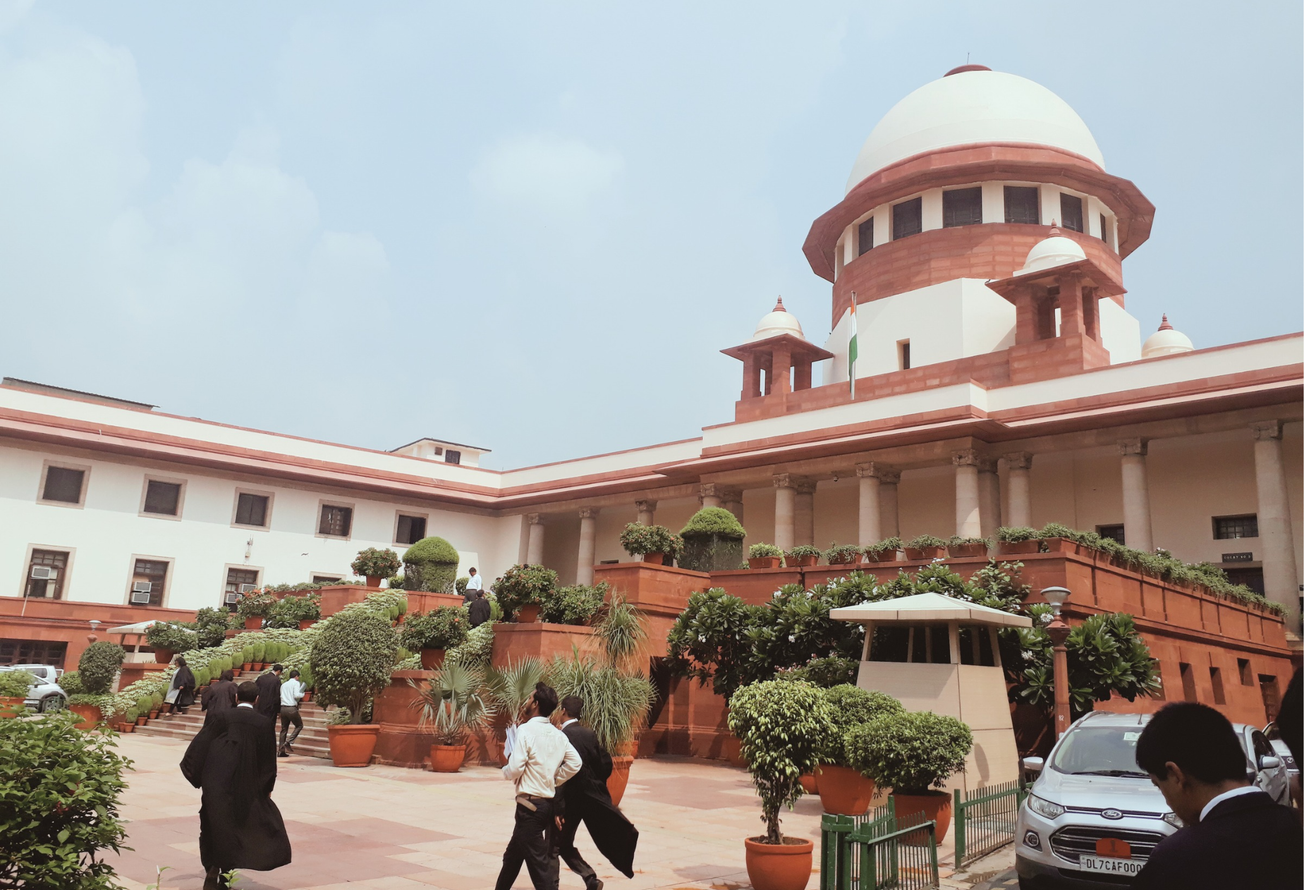
The controversy has now reached the Supreme Court, which is examining whether the marital rape exception under both the former IPC and the BNS violates the Constitution. This is taking place through several connected cases, including appeals from the High Court and separate petitions challenging the constitutionality of the marital rape exception.
One is Hrishikesh Sahoo v. State of Karnataka (2022), where the Karnataka High Court refused to drop the rape charges against a husband accused of sexually abusing his wife. The Court criticised the doctrine of coverture as regressive, referring to the doctrine of coverture, under which a wife’s legal identity was subsumed into her husband’s. The husband challenged this decision in the Supreme Court.
His appeal was heard alongside other challenges to the marital rape exception, including the one arising from Delhi High Court’s split verdict mentioned earlier.
During the Supreme Court proceedings, Senior Advocate Indira Jaising, representing the wife, defended the High Court decision to allow the husband to be prosecuted for rape under Section 376 of IPC. She pointed out that the High Court had already taken the view that where a wife was treated as a “sexual slave,” prosecution could follow. Jaising argued that the existing law could be interpreted to permit prosecution without first striking down the marital rape exception.
The Supreme Court has scheduled a final hearing of these connected cases on 18 November 2026, with the Union government’s 2024 affidavit defending the exception forming part of the proceedings. In simple words, the central question is: why is the same sexual assault otherwise punishable under law but exempted when the perpetrator is the husband? The Court must answer that without regressing into arguments that defend the sanctity of marriage, which rest on women’s subjugation.
“Excessively Harsh to Call It Rape”: Indian Government
In 2024, the Union Government moved to defend the marital exception. It had already done so in a 2017 affidavit before the Delhi High Court, citing threats to marriage and potential misuse of the law. This time, it filed an affidavit before the Supreme Court, opposing the removal of the exception, arguing that although a husband has no right to violate his wife's fundamental rights, describing non-consensual sex within the “institution of marriage” as rape could be “excessively harsh” and “disproportionate,” citing the National Commission for Women. The affidavit acknowledged that a woman’s consent is not obliterated by marriage, but argued that sexual violations within marriage should be treated differently. This argument relies on the legal concept of “intelligible differentia”, which allows the law to treat two groups differently if there is a clear distinction between them that is relevant to the law’s purpose. The government claims marriage provides that distinction.
It further maintained that existing provisions of the IPC and the Domestic Violence Act, 2005, could address such violations and ensure serious penal consequences.
The government’s arguments would be laughable if they weren’t so grotesquely patriarchal and dangerous. They blatantly shift the inquiry from the absence of a married woman’s consent to preserving the sanctity of marriage. By warning that punitive measures against husbands would “perpetrate more harm than good for married women” and lead to their “destitution and vagrancy”, the government is rallying for patriarchal conventions to prevail over principles of criminal law.
United Kingdom and South Africa do not have any exception for marital rape, nor does Pakistan, where, earlier this year, a court sentenced a man to ten years in prison for raping his wife. Nepal also criminalises marital rape, though the sentence is lighter than for rape outside marriage. France goes further, making rape by a spouse an aggravated offence carrying a maximum sentence of 20 years instead of 15.
Historical Anxieties Against Misuse
The government and other opponents of criminalisation of marital rape have repeatedly raised the possibility of misuse to defend the marital rape exception. This echoes historical anxieties and allegations that women misuse Section 498A of the Indian Penal Code, 1860, which criminalised “cruelty” by husbands and relatives. The question persists: If the possibility of misuse were sufficient grounds to deny legal recognition to victims, which criminal laws would survive such scrutiny?